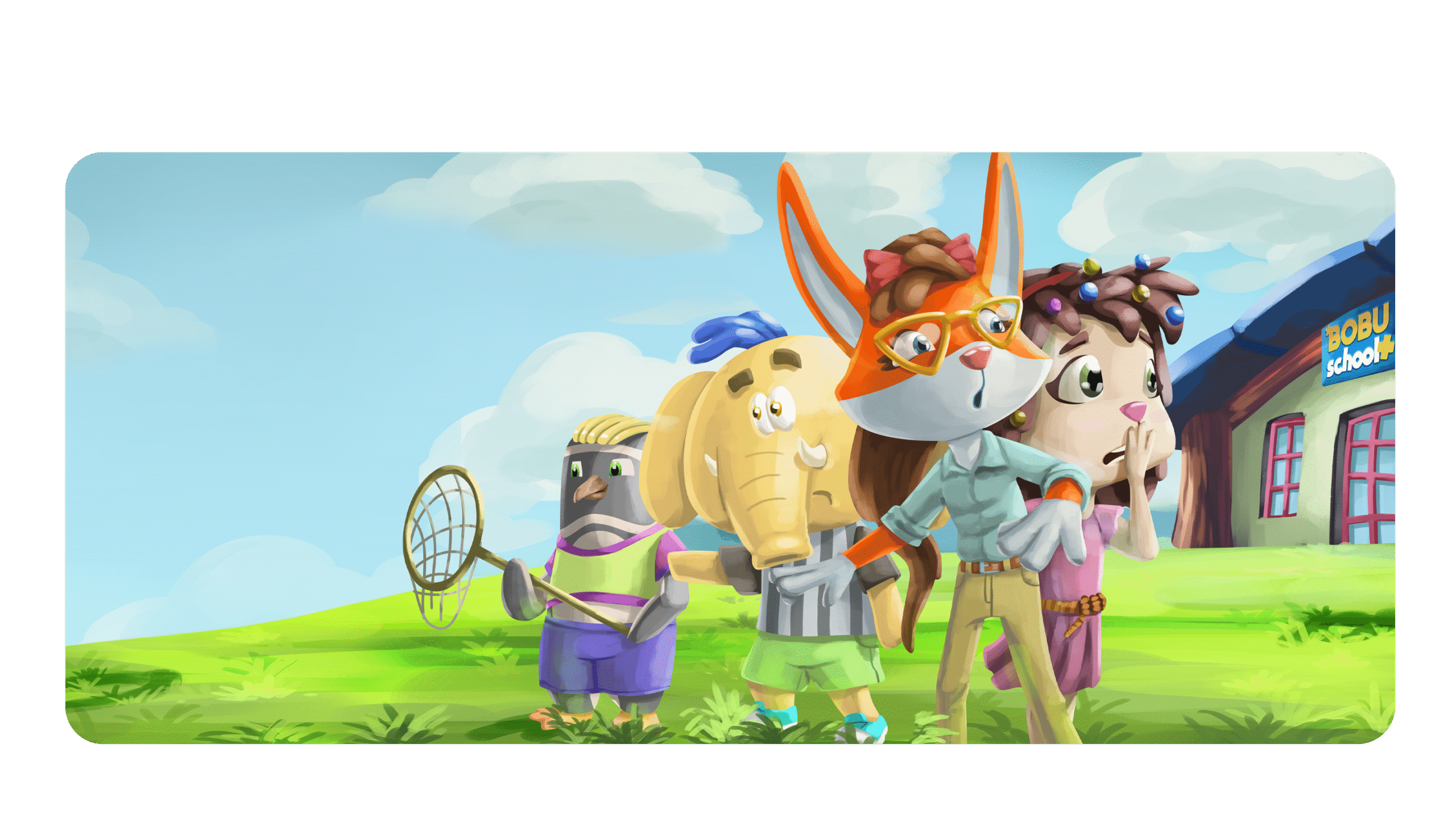

TL;DR: We often treat math like “medicine”—something unpleasant that must be endured. But Mark Twain taught us a secret: if you frame a task as a privilege rather than a chore, resistance turns into curiosity. Here is how to use the “Tom Sawyer Effect” to fix math anxiety.
The scene is familiar. You are sitting at the table in the kitchen. Your child has a worksheet in front of them. They have a pencil in their hand, but it hasn’t moved in ten minutes.
You take a deep breath and say, “Come on, you have to do this. It’s important for school.”Shoulders droop. Eyes roll. A tear might fall.
We have all been through it. We try to make math like steamed broccoli. We tell them, “Eat it; it’s good for you.” But the more we push, the more they fight back.
But what if we have been selling it wrong?
Remember the story of Tom Sawyer? When he was forced to paint a fence on a Saturday, he didn’t complain. Instead, he acted like it was the most fun, exclusive activity in the world. He told his friends, “Does a boy get a chance to whitewash a fence every day?”
Soon, the other boys were begging, and even paying him, for a turn to paint.
Tom Sawyer knew a psychological truth that modern neuroscience confirms: Context is everything.
If you frame math as a “chore,” it feels like punishment. If you frame it as a “puzzle” or a “challenge,” it feels like play.
The Core Problem: The “Eat Your Broccoli” Approach
Why do so many kids (and adults) say, “I’m just not a math person”?.
It’s not because their brains are wired differently. It’s because we introduced math as a set of boring rules to memorize, rather than a secret language to decode the world.
We focus on the hard work (flashcards, timed tests) instead of the utility (building things, handling money, cooking).
To change the output, we have to change the input. We need to stop acting like math is “hard work” and start acting like it’s a “useful superpower”.
Strategy #1: The “Forbidden Puzzle” (Reversing the Pressure)
Tom Sawyer didn’t beg his friends to paint. He made it seem hard to get access to.
The Old Way: “Sit down and finish these three subtraction problems right now.”
The Tom Sawyer Way: “I found this really tricky number puzzle. I was going to try it, but I’m not sure if it’s too tough for a 7-year-old. Do you think you can crack the code before I finish doing the dishes?”
Why it works: You aren’t forcing, you are challenging. Kids love to prove adults wrong. By adding a bit of mystery (“crack the code”) and removing the command (“sit down”), you trigger their innate curiosity.
Strategy #2: Math in the Wild (Invisible Learning)
Worksheets are abstract. Real life is concrete.
When math is just symbols on a page, it feels like a foreign language that no one speaks. But when it helps you get what you want (like a cookie or a castle), it suddenly has a purpose.
The Move: Stop doing math at the desk. Do it in the kitchen or the living room.
- Baking: “The recipe calls for 2 cups, but we only have this 1/2 cup scoop. How many scoops do we need?” (Suddenly, fractions aren’t scary; they are tools to get cookies).
- The Lego Architect: “We need to build a bridge between these two towers. How many studs long does it need to be? Let’s count.”
- The Pizza Budget: “We have $20 for a basic cheese pizza. If additional toppings cost about $2 each, how many can we afford before exceeding our budget?”
You are doing algebra and geometry, but to them, you are just making dinner or building a castle.
Strategy #3: The “Clumsy Parent” Game
Sometimes it can kill confidence, like being told “You’re wrong” by an adult. But correcting an adult? That is pure joy for a child.
The Move: Make mistakes on purpose.
While you are counting snacks or adding up a score in a game, get it wrong – loudly. “Okay, 5 plus 5 is… 12!”
Wait for it. Watch their eyes light up. “No! It’s 10!”
The Result: They just did the math to correct you. But because they were the authority figure in that moment, they felt smart, not judged. You are building their confidence muscle without them even realizing it.
A Warning: Beware of “Chocolate-Covered Broccoli” Apps
When looking for help, you will find thousands of “Math Games” on the app store. Be careful.
Many of these apps fall into the Attention Economy trap. They aren’t actually making math fun; they are just distracting your child with flashy lights, coins, and loud noises.
If an app spends 10% of the time on a math problem and 90% of the time on a “reward animation,” it isn’t teaching—it’s just entertaining.
Real “Tom Sawyer” fun comes from the satisfaction of solving the problem, not the digital confetti that explodes afterwards. Look for apps where the math is the mechanic (like logic puzzles), not just a barrier to get a prize.
Age-Appropriate “Tricks”
Toddlers & Preschoolers (2–5 Years)
- The Focus: Counting as a rhythm.
- The Trick: “I bet I can walk to the car in 20 steps. Can you do it in 30?” They will count every step because it’s a race.
Early Primary (6–8 Years)
- The Focus: Basic Operations (+, -).
- The Trick: Board games. Many card games or family games require constant math. Family game night is secretly math class.
Tweens (9–12 Years)
- The Focus: Money, Ratios, and Stats.
- The Trick: Shopping or sports stats. “If this shirt is 30% off, how much money do you save?” Let them calculate the discount to keep the change.
Common Myths About Math
Myth #1: “You are either born good at math or you aren’t.”
Reality: Math is a muscle, not a gene. The “Tom Sawyer” effect helps them exercise that muscle without feeling the burn.
Myth #2: “Making it fun means dumbing it down.”
Reality: Not at all. Hard puzzles are fun. The struggle is the fun, provided the stakes are low and the context is right.
Myth #3: “Being fast at math means you are good at math.”
Reality: Speed is not intelligence. In fact, some of the world’s greatest mathematicians are slow thinkers who dive deep. When we force speed (timed tests), we create anxiety. When we encourage slow, deep thinking, we create understanding.
Myth #4: “I’m bad at math, so I can’t help my child.”
Reality: Your skill level matters less than your attitude. If you say, “I hate math, it’s so hard,” you teach them math anxiety. If you say, “I don’t know the answer, let’s figure it out together,” you teach them resilience. You don’t need to be an expert; you just need to be a curious partner.
Conclusion
We want our kids to love reading, so we read them exciting stories. We don’t just hand them a dictionary.
We need to do the same for math.
We need to take the “work” out of the “worksheet.” We need to stop painting the fence ourselves and show them how cool the paintbrush is.
So, here is your challenge for tonight: Don’t ask them to do their homework. Bet them that they can’t solve the “mystery” on the page before you finish your coffee.
You might just find them asking for a turn to paint the fence.
Know a parent who dreads “Math Night”?
If this perspective shifted something for you, share this article with a friend.
Let’s help our kids see math as a playground, not a prison.
Related Posts
The ‘Tom Sawyer’ Effect: How to Trick Your Child into Loving Math
We often treat math like "medicine"—something unpleasant that must be…
Stop Worrying About “School Readiness”:The 3 Skills That Actually Predict Future Success
We obsess over whether our kids can recite the alphabet…
The Socratic Tablet: Why ‘Asking’ Matters More Than ‘Swiping’
In the digital age, we're raising kids who are great…
Screen Time Nutrition Analogy: Is Your Child Consuming ‘Empty Calorie’ Media?
Screen time nutrition analogy: Learn why not all screen time…